Temporary structures against heat islands
- Years: 2024 - 2025
- Location: Fribourg (CH)
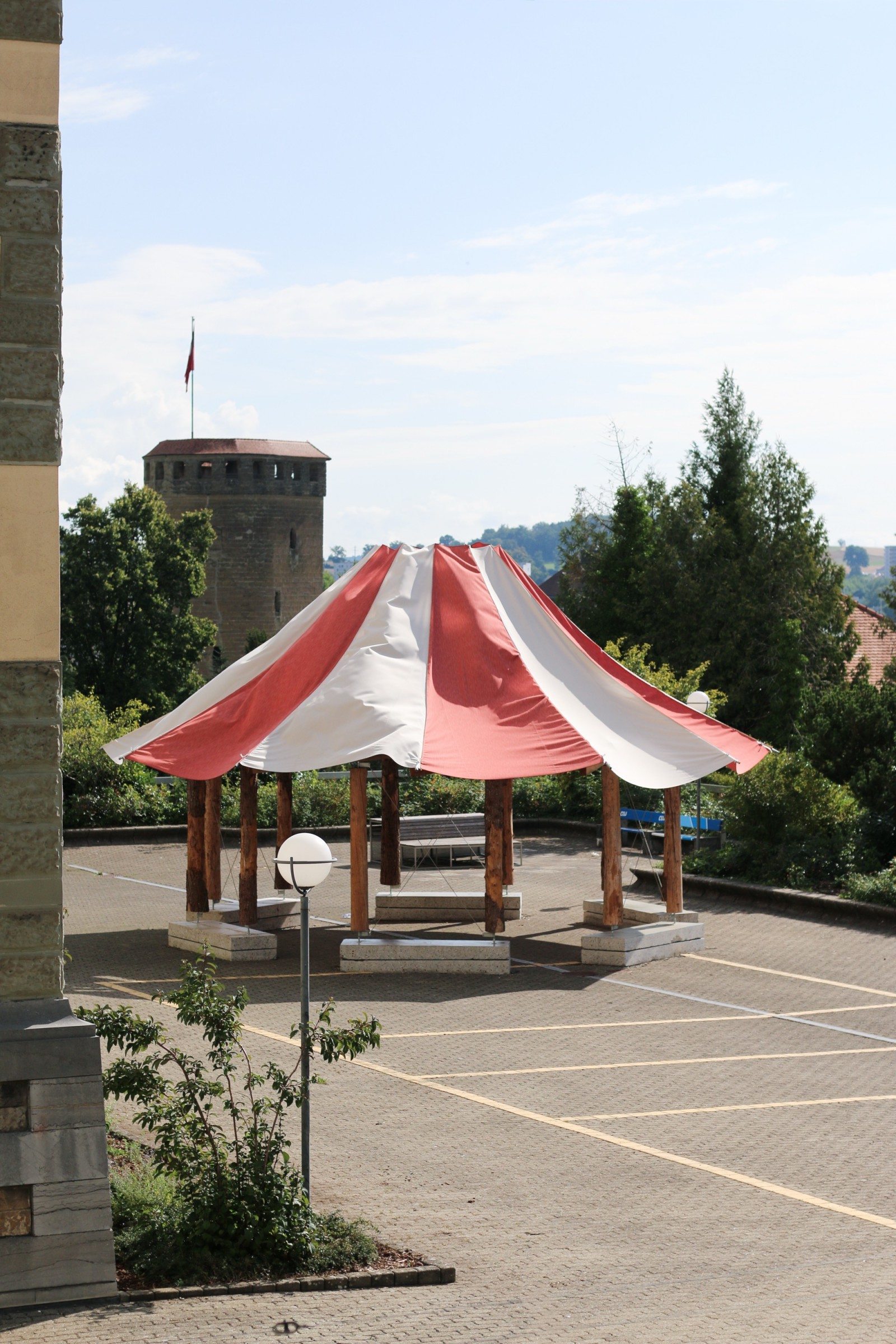
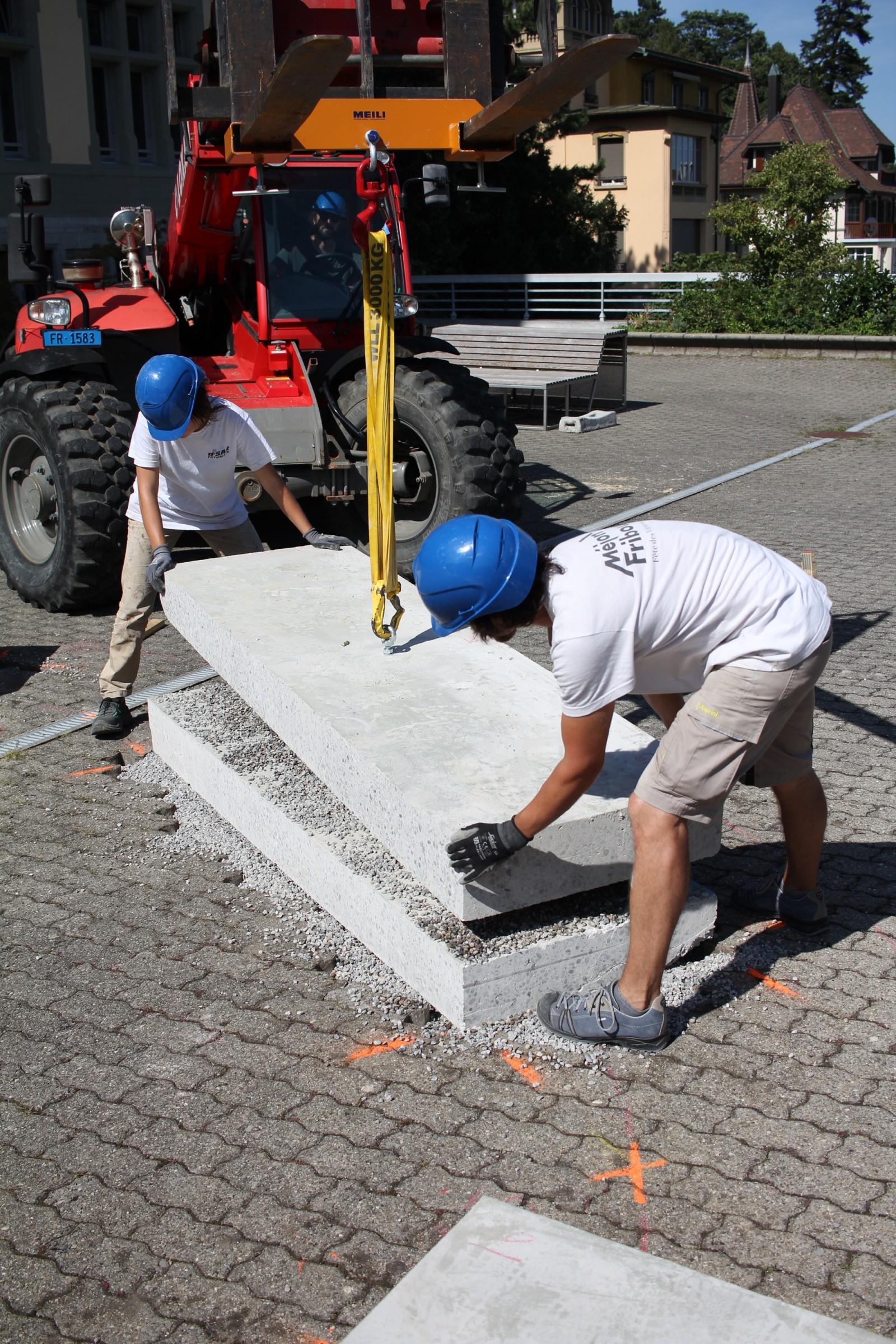
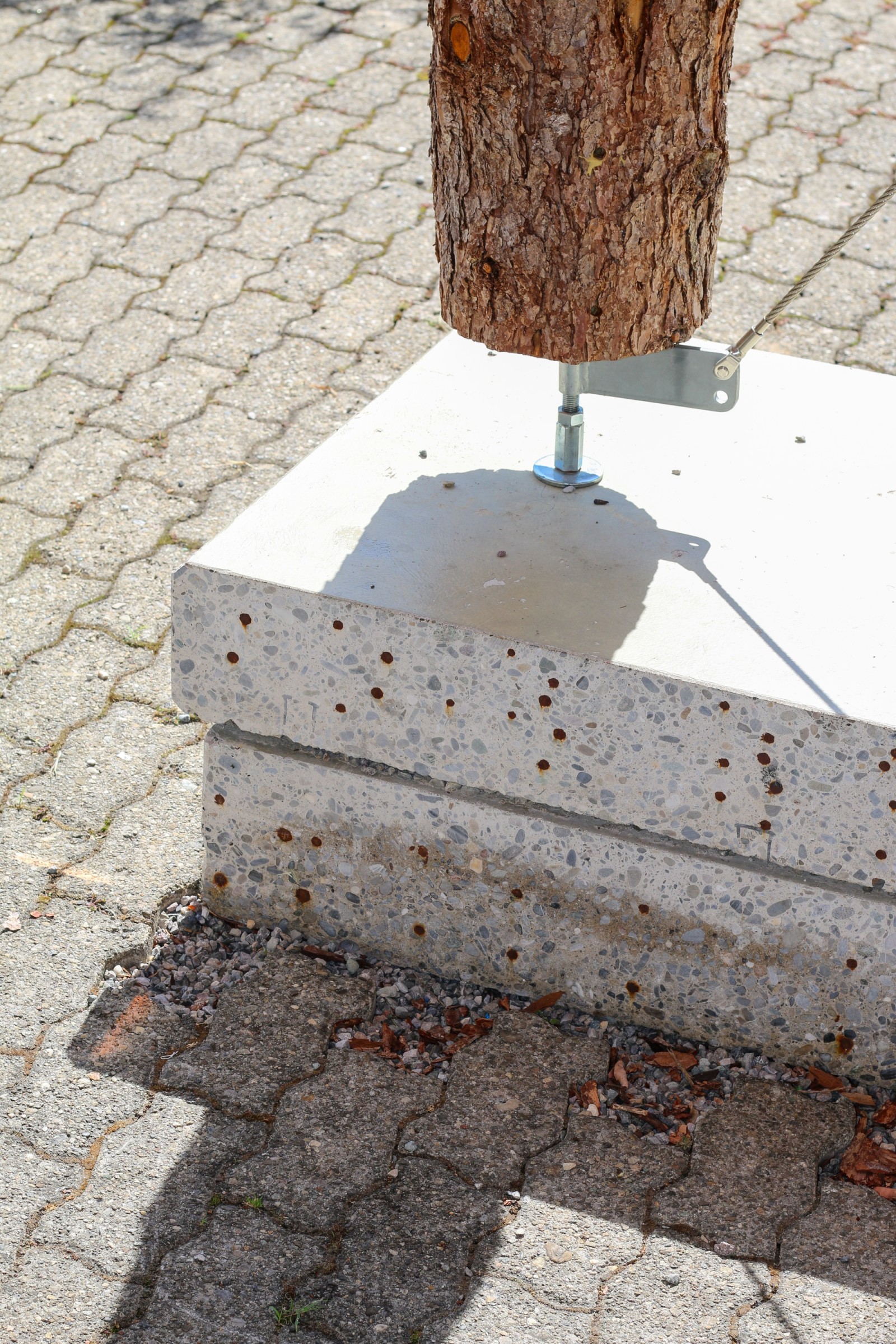
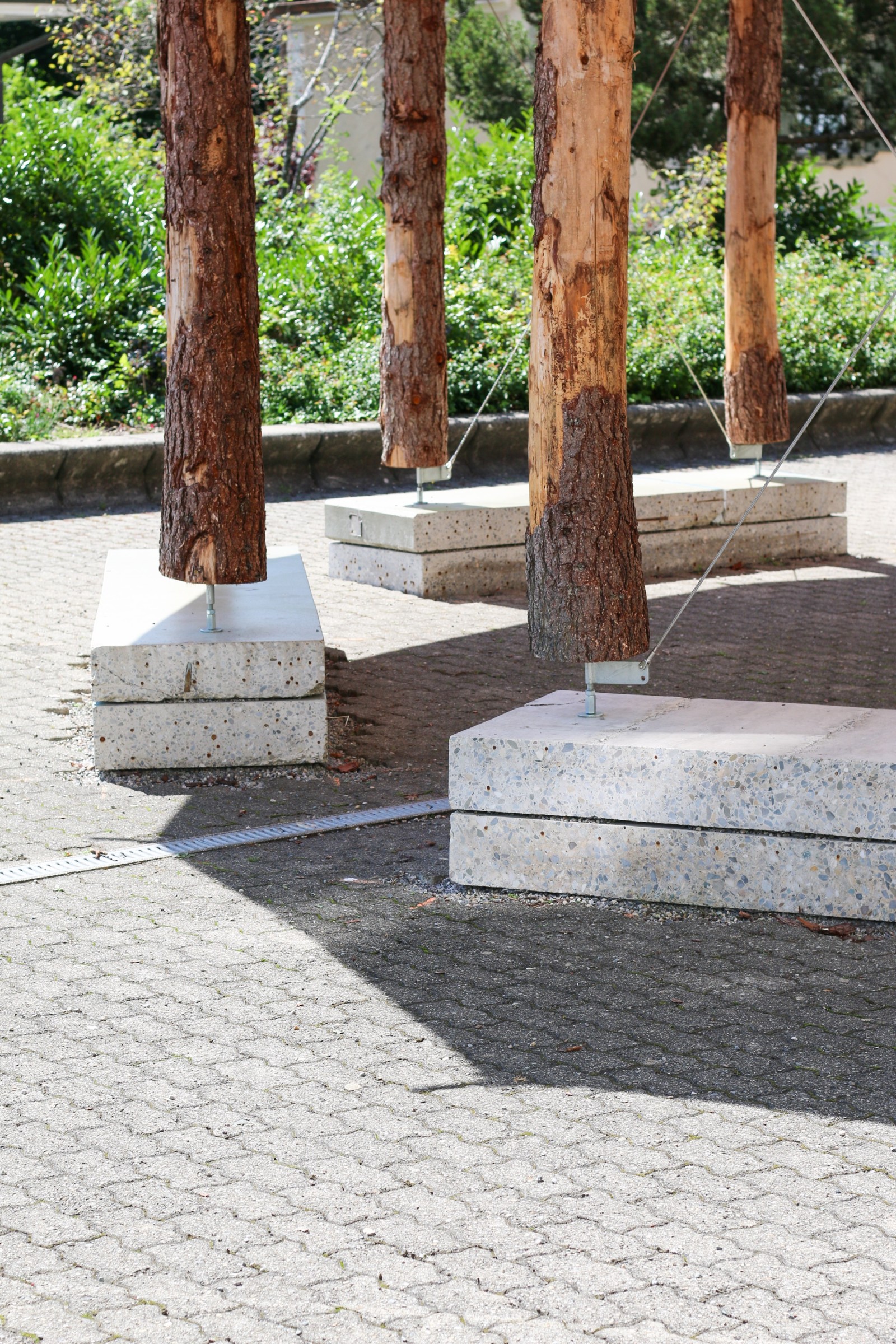
Due to climate change, urban heatwaves are becoming more frequent, even in traditionally temperate regions such as Switzerland. The accumulation of hard surfaces, high building density and a lack of vegetation amplify the urban heat island effect, creating microclimates where heat builds up and lingers.
Schoolyards are particularly affected by this phenomenon. Often designed as large, hard- surfaced play areas, they tend to overheat and become inhospitable spaces in summer. Yet, as they are often open to the public, they have the potential to become cooling spaces at the scale of the neighborhood.
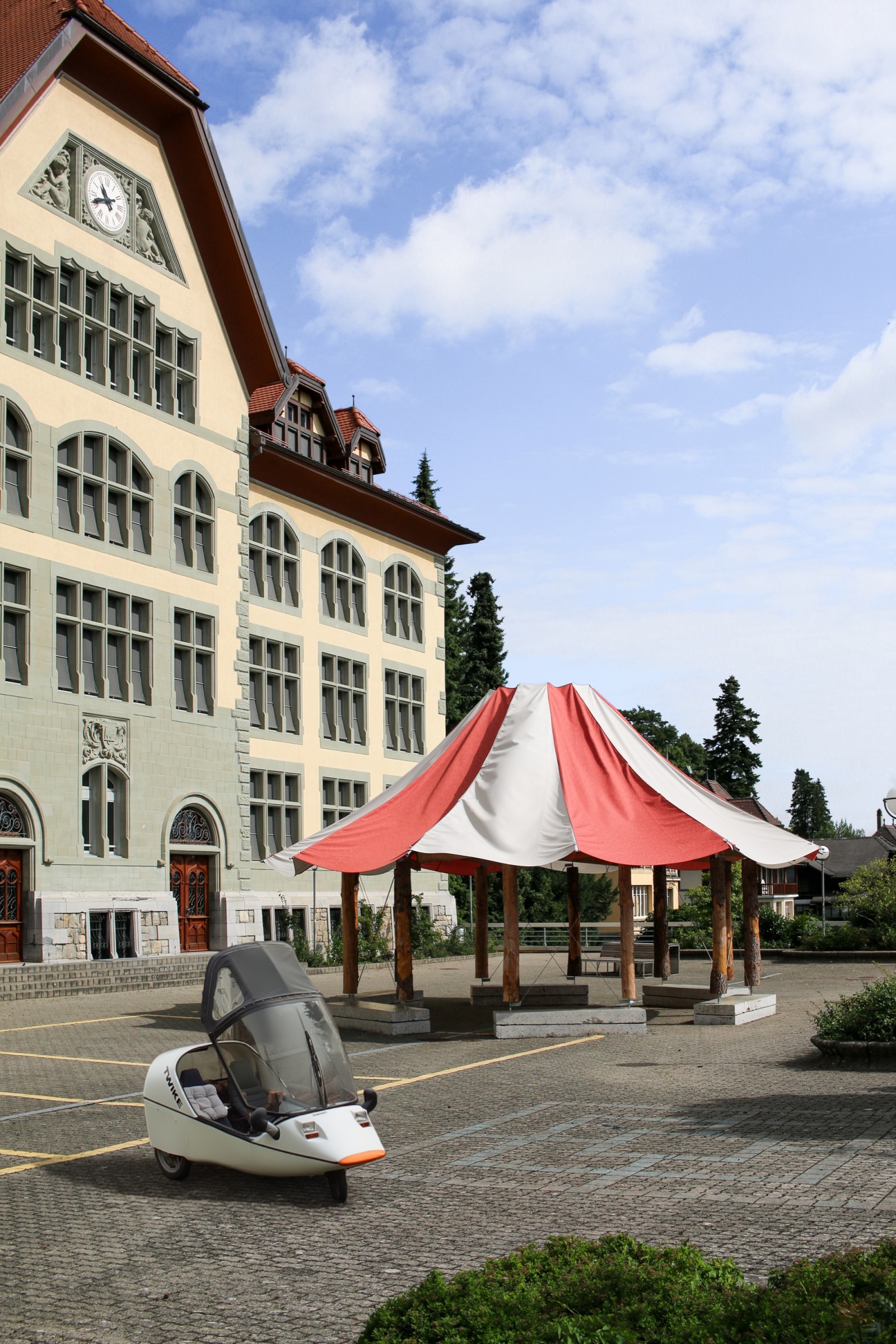
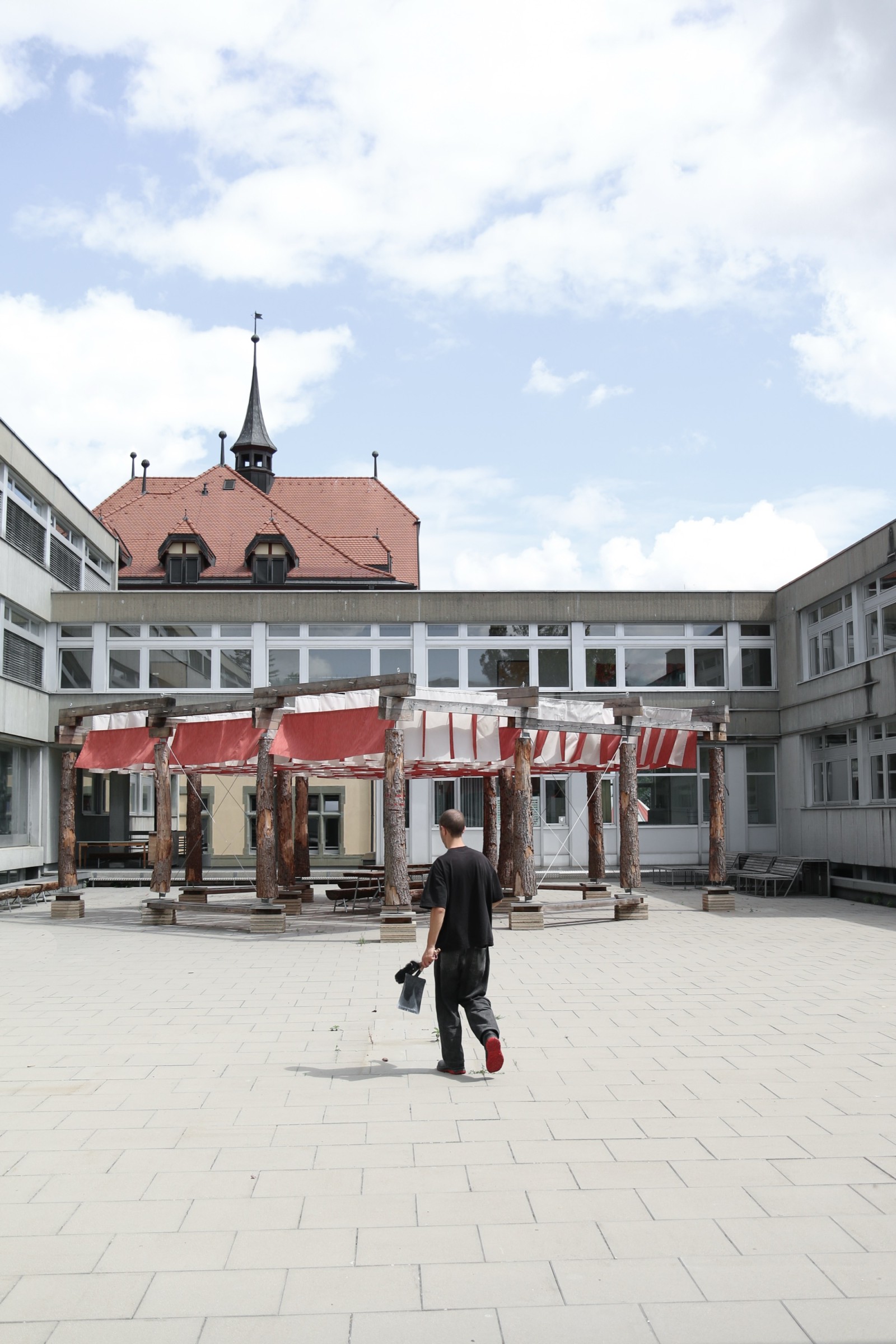
The intervention carried out in the playground of the Secondary School of Jolimont explores different ways of providing shade through the installation of temporary structures. The project was developed through a participatory approach involving the school’s students. Workshops helped identify the desired uses and influence the placement and configuration of the pavilions, giving the project an educational dimension.
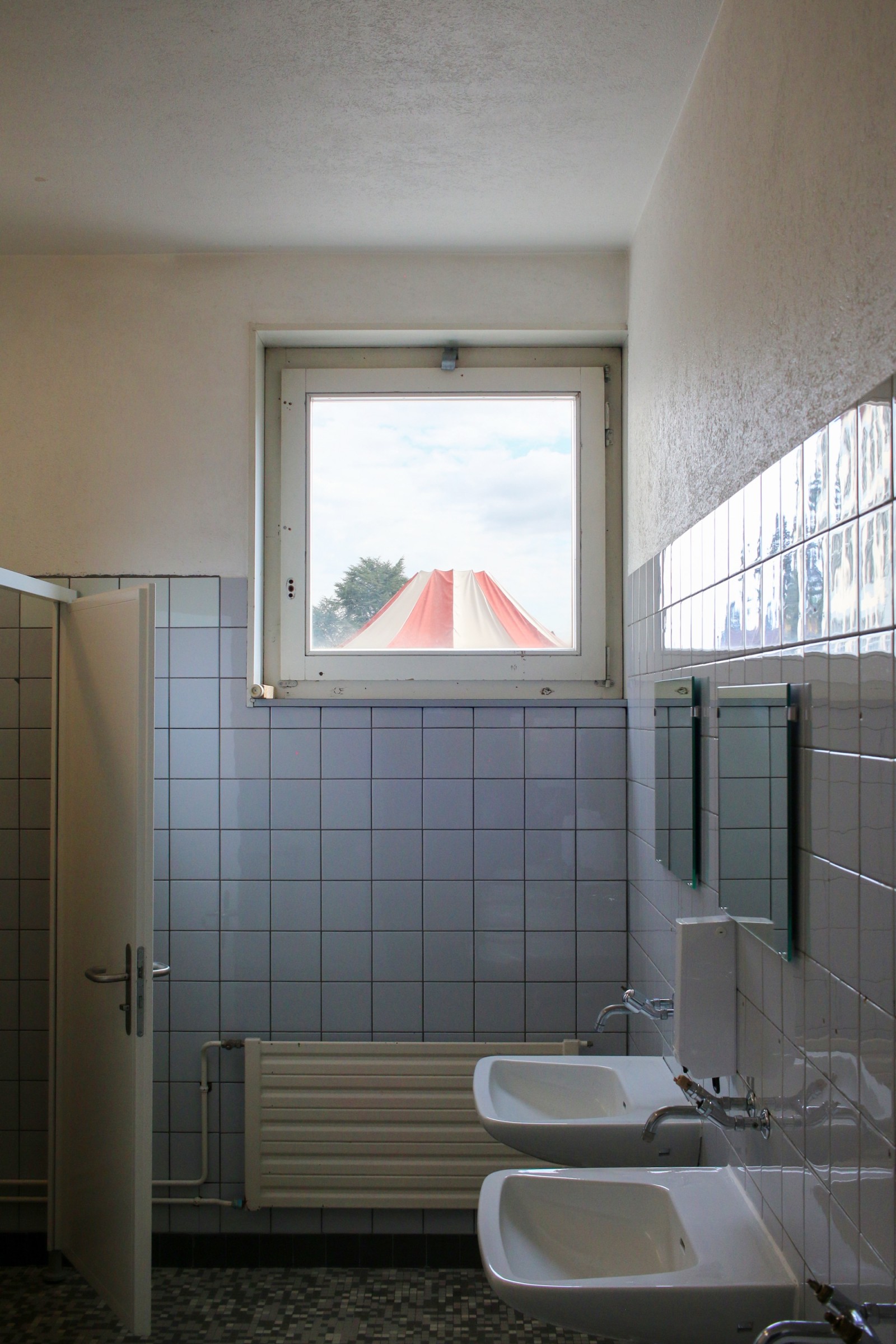
Conceived as temporary structures yet designed to last at least ten years, these structures lie between experimental installations and urban infrastructure. The project takes the form of a pavilion installed in each of the two schoolyards, creating shaded, breathing spaces within the built environment.
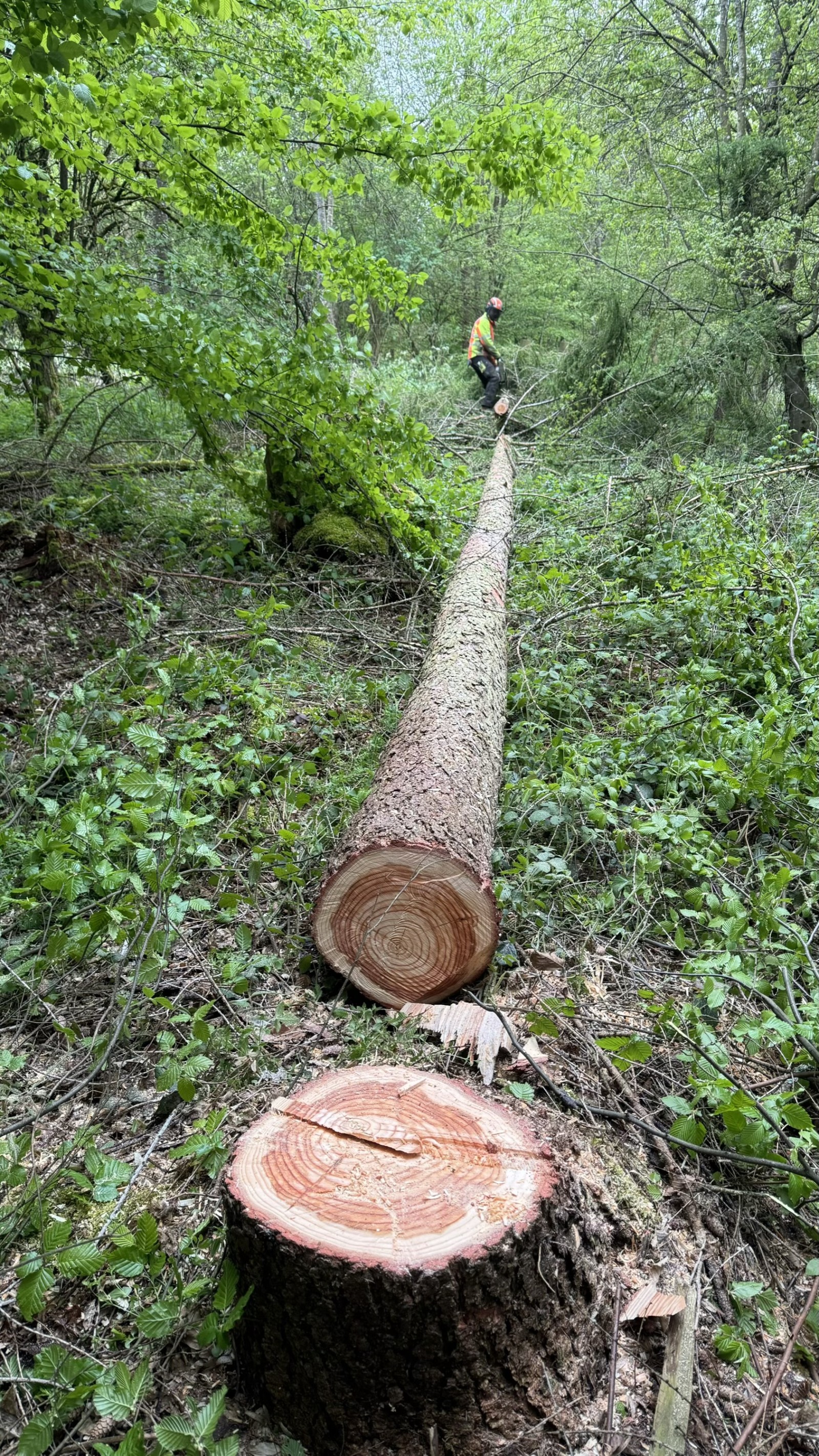
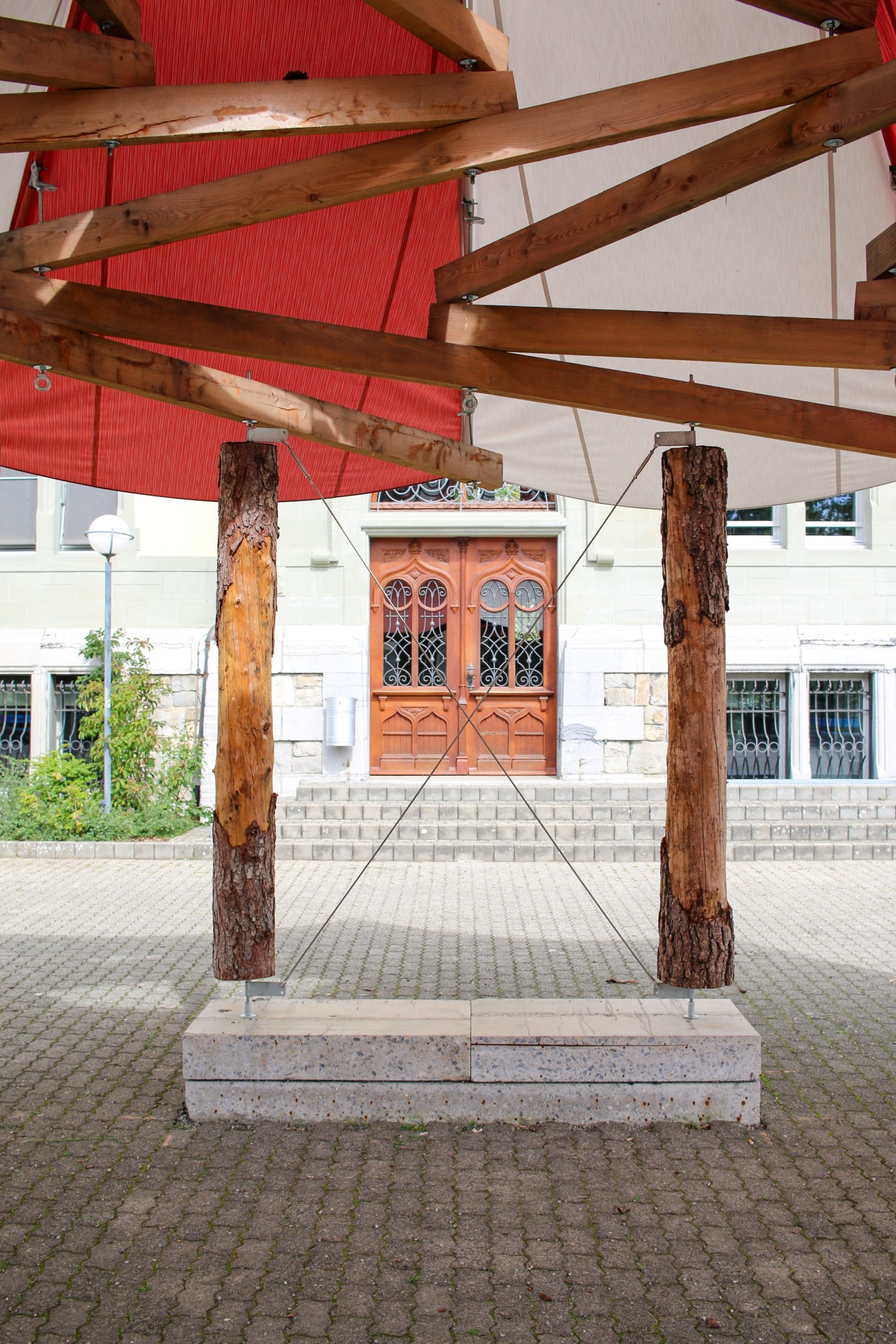
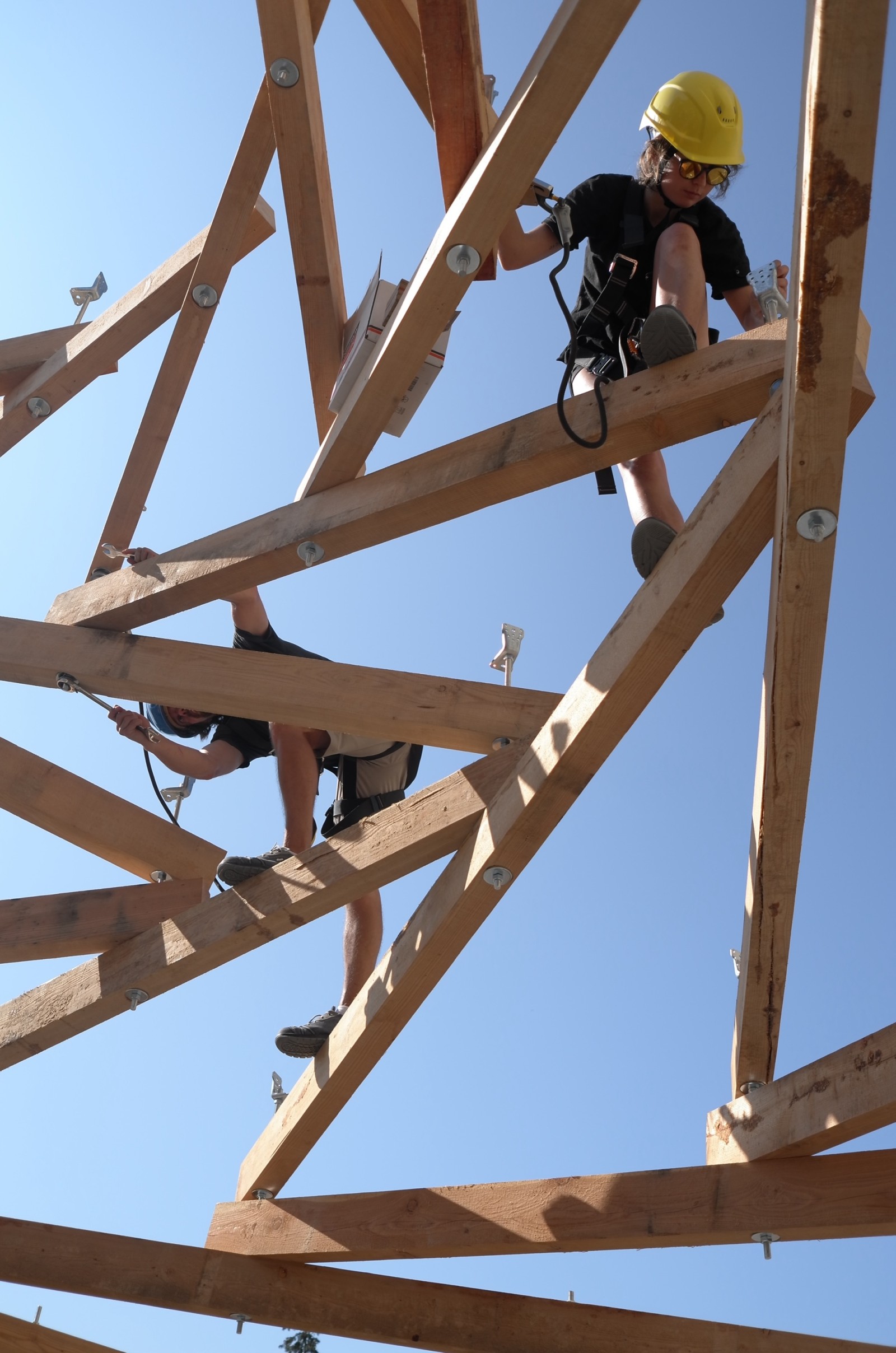
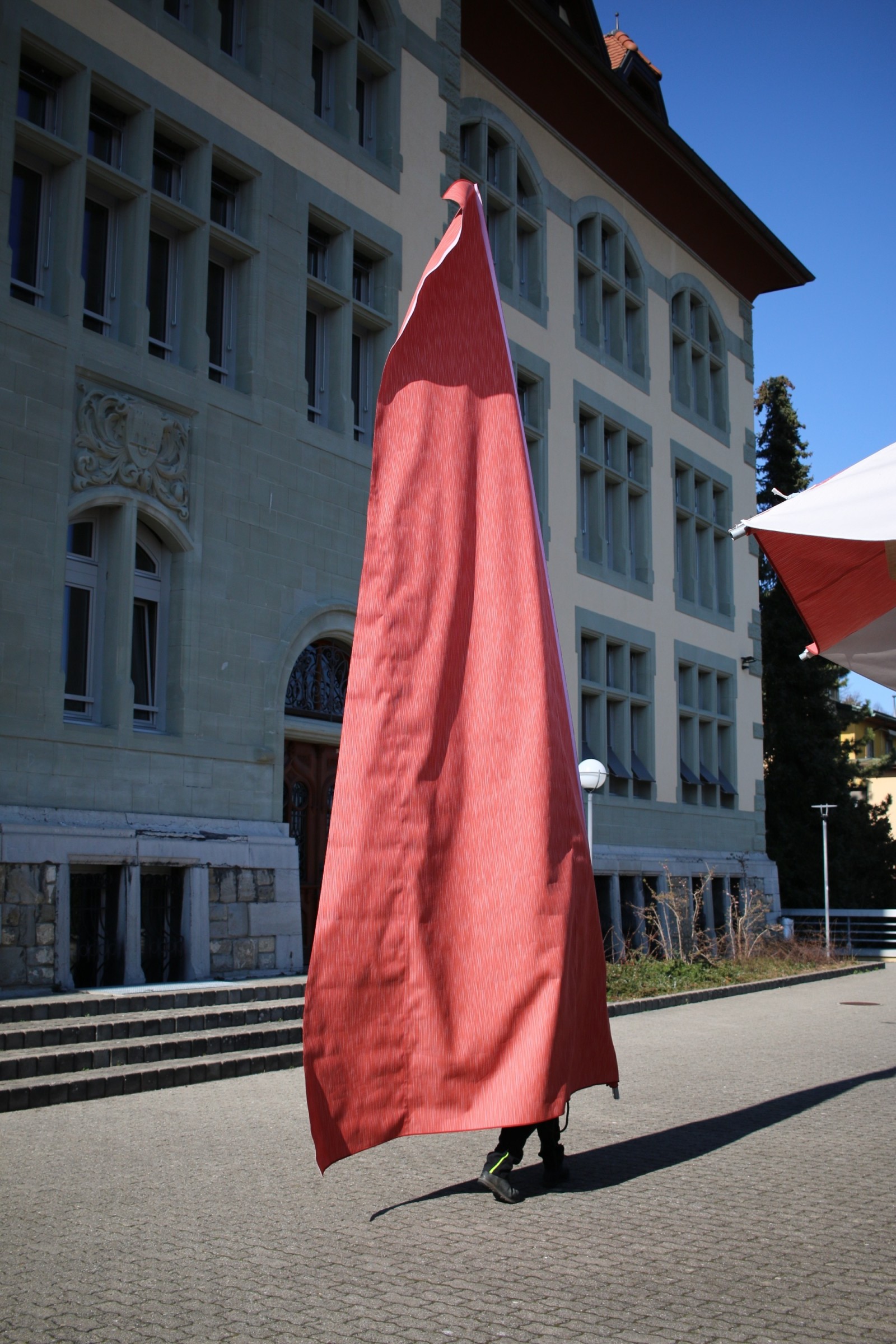
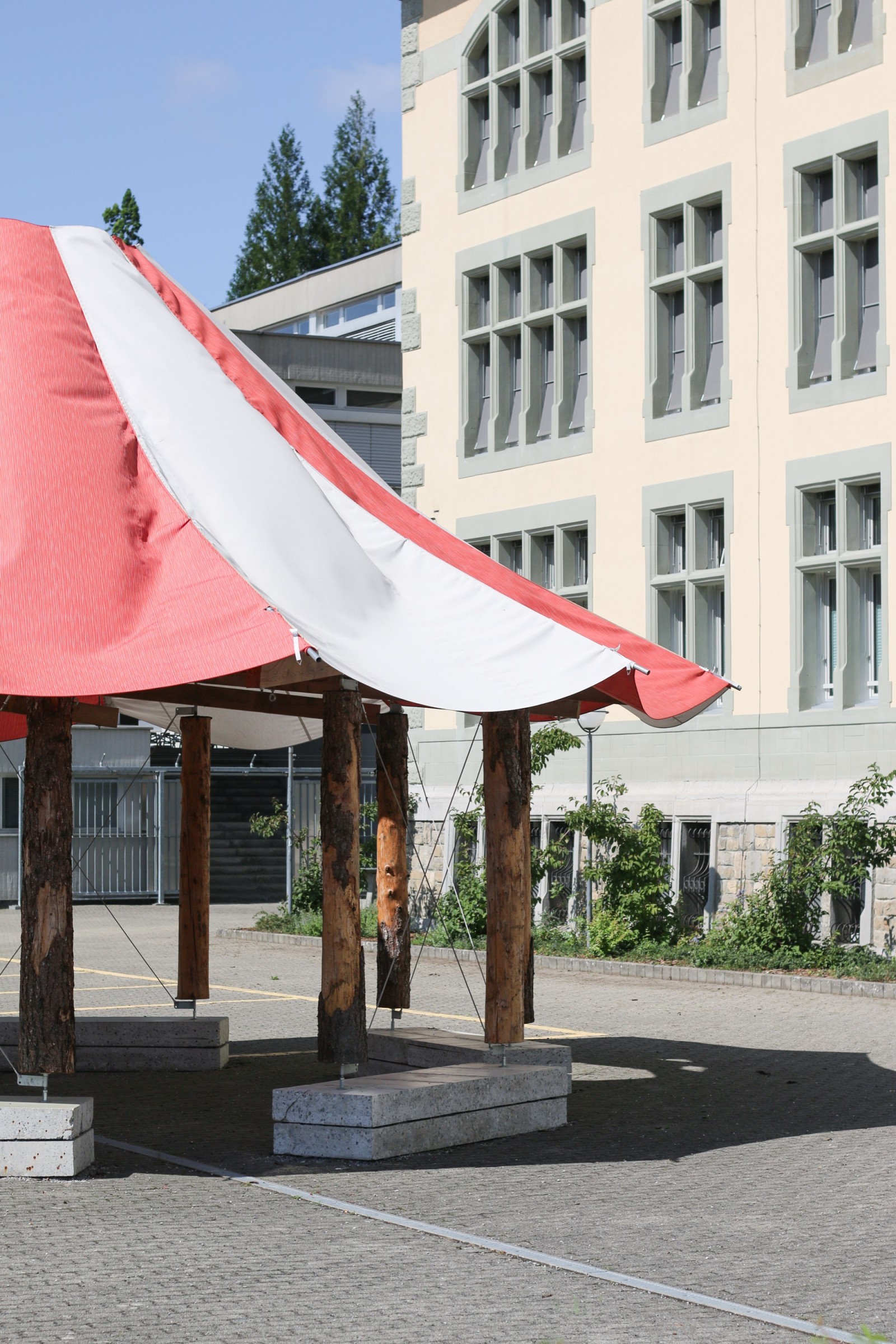
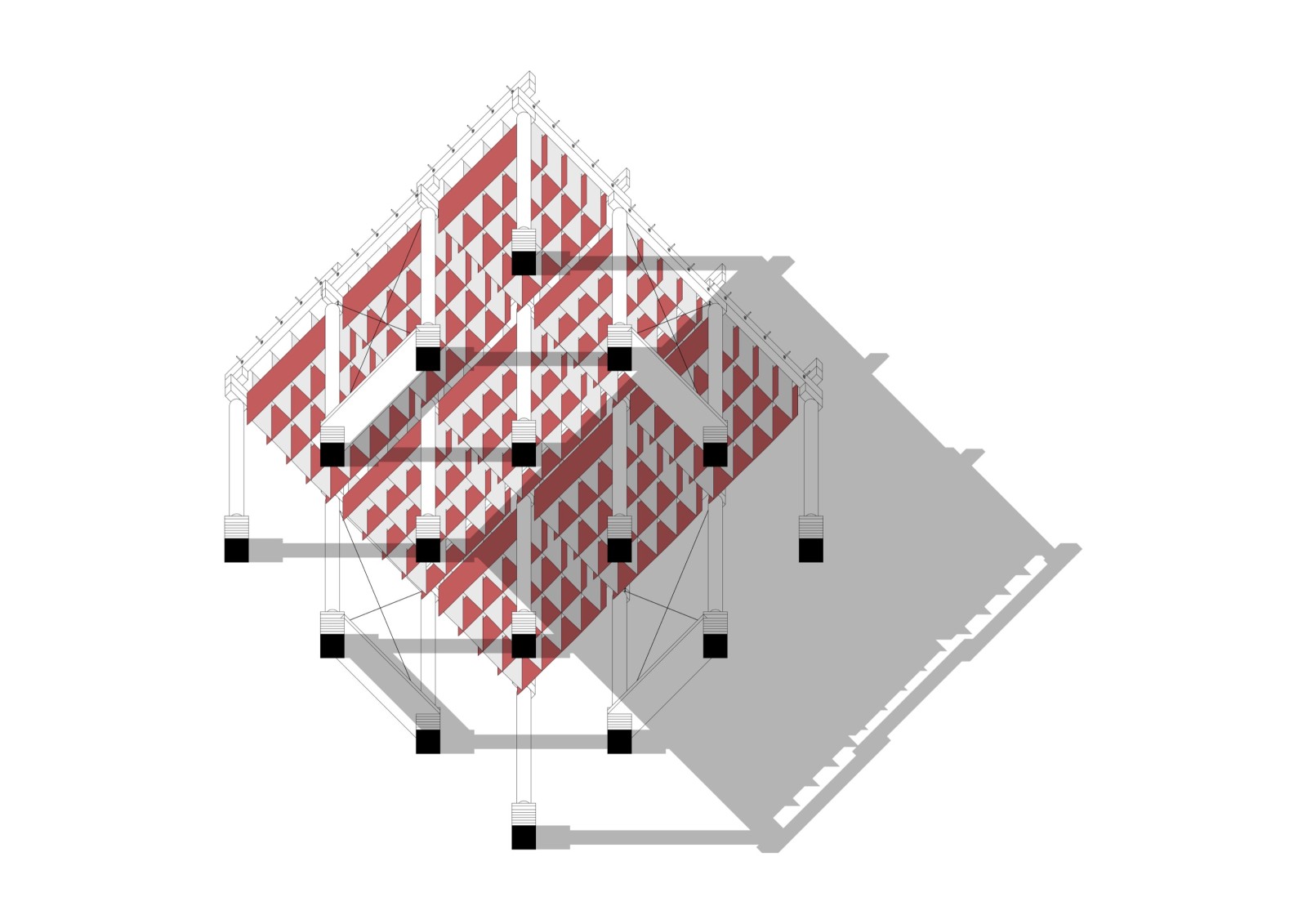
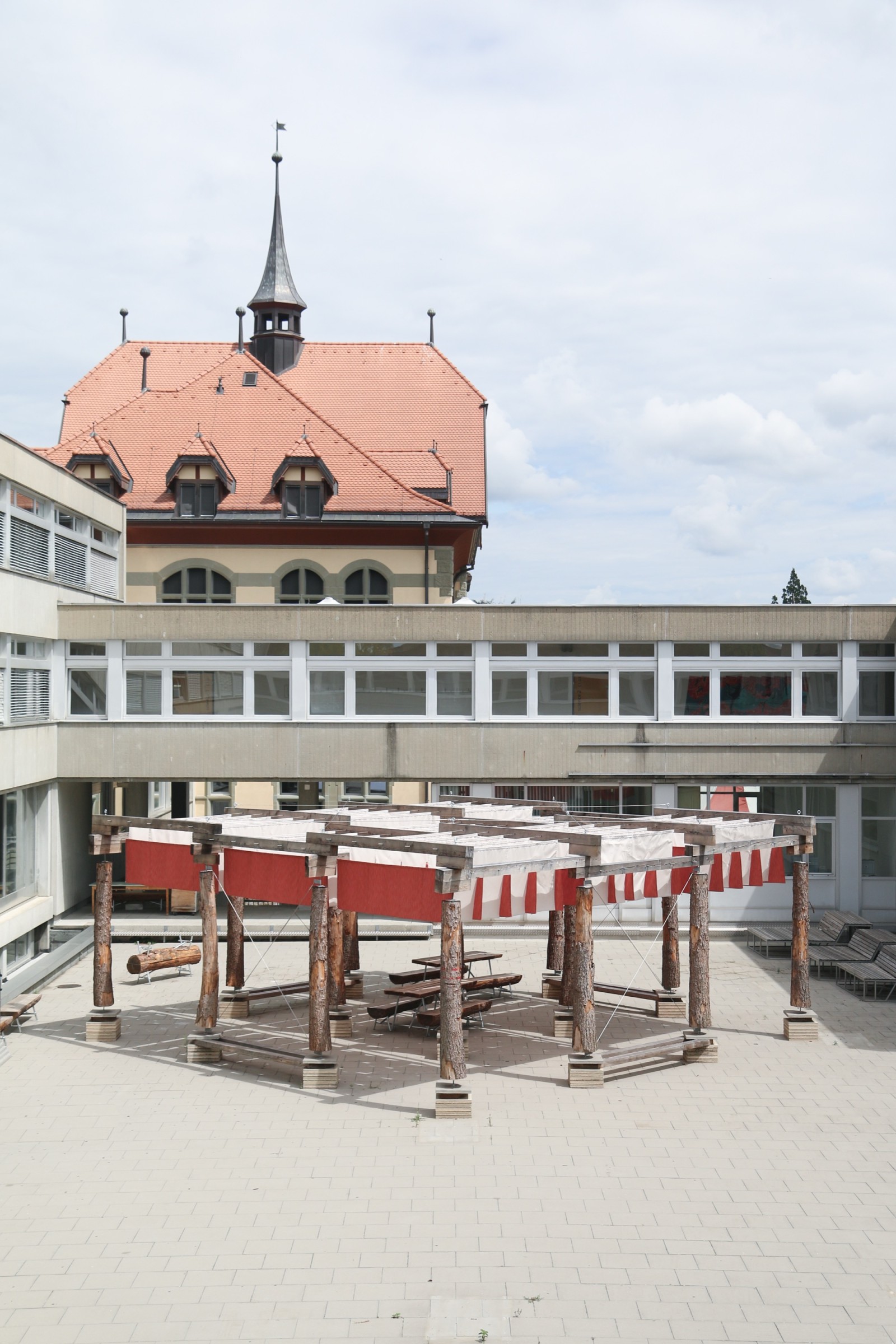
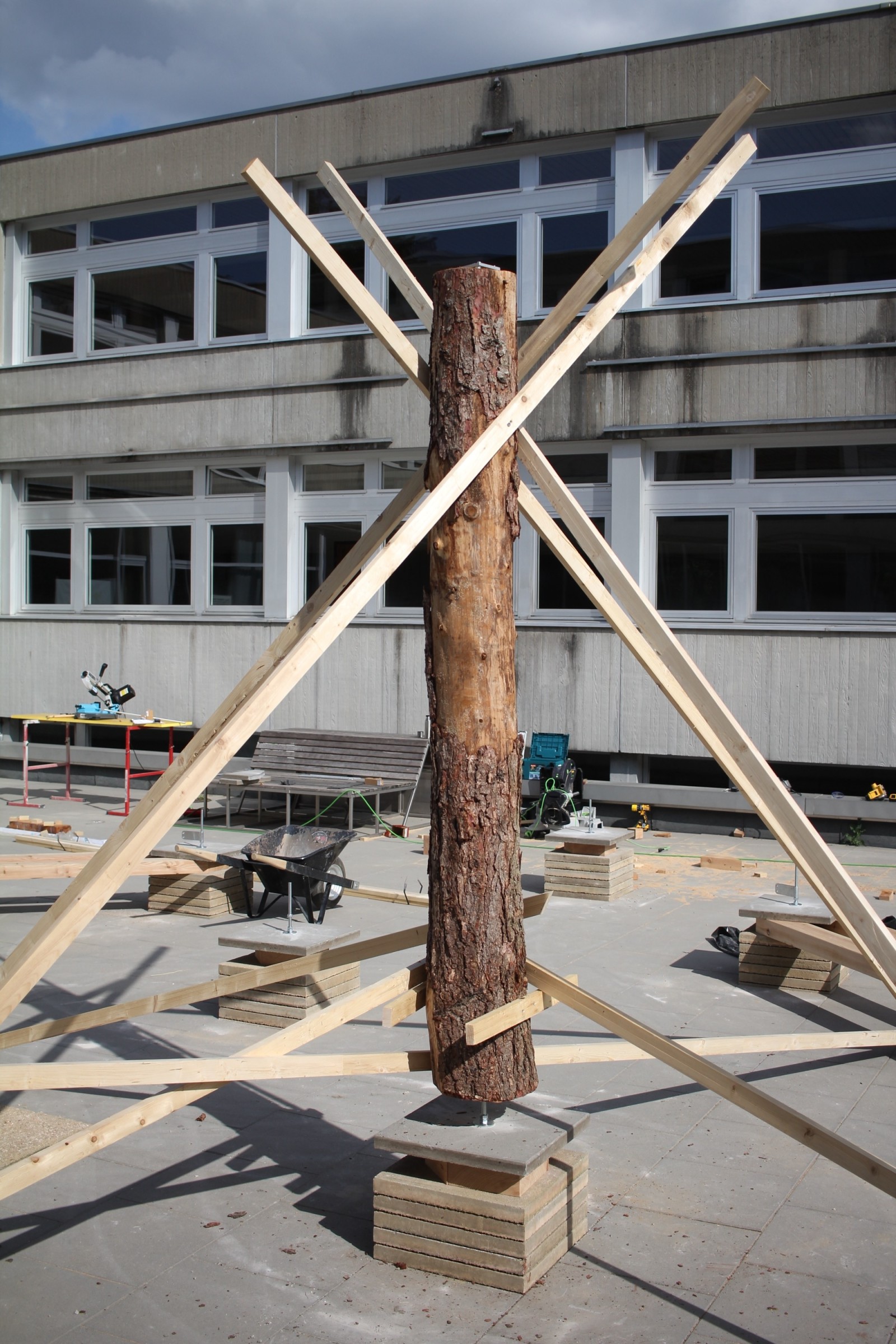
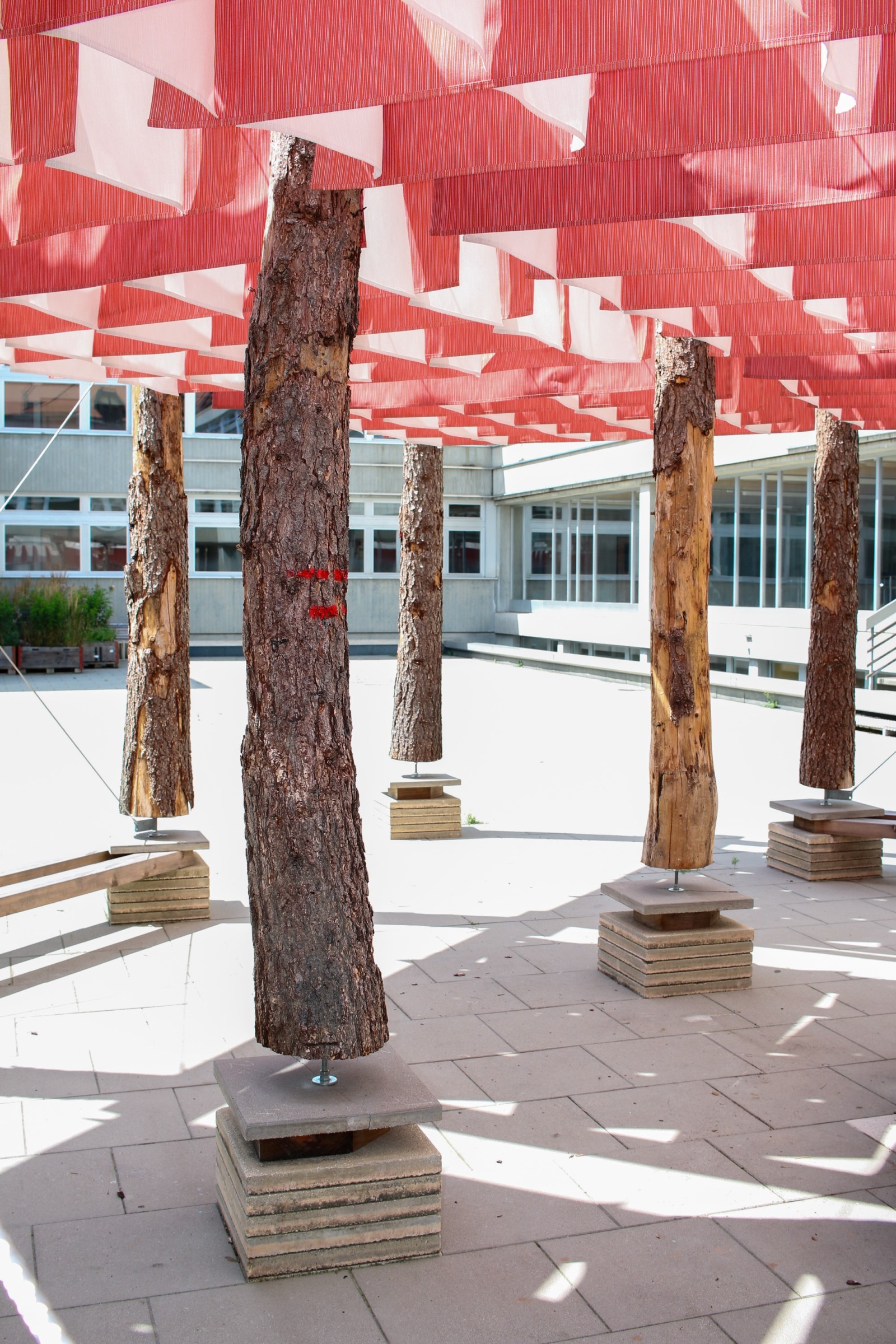
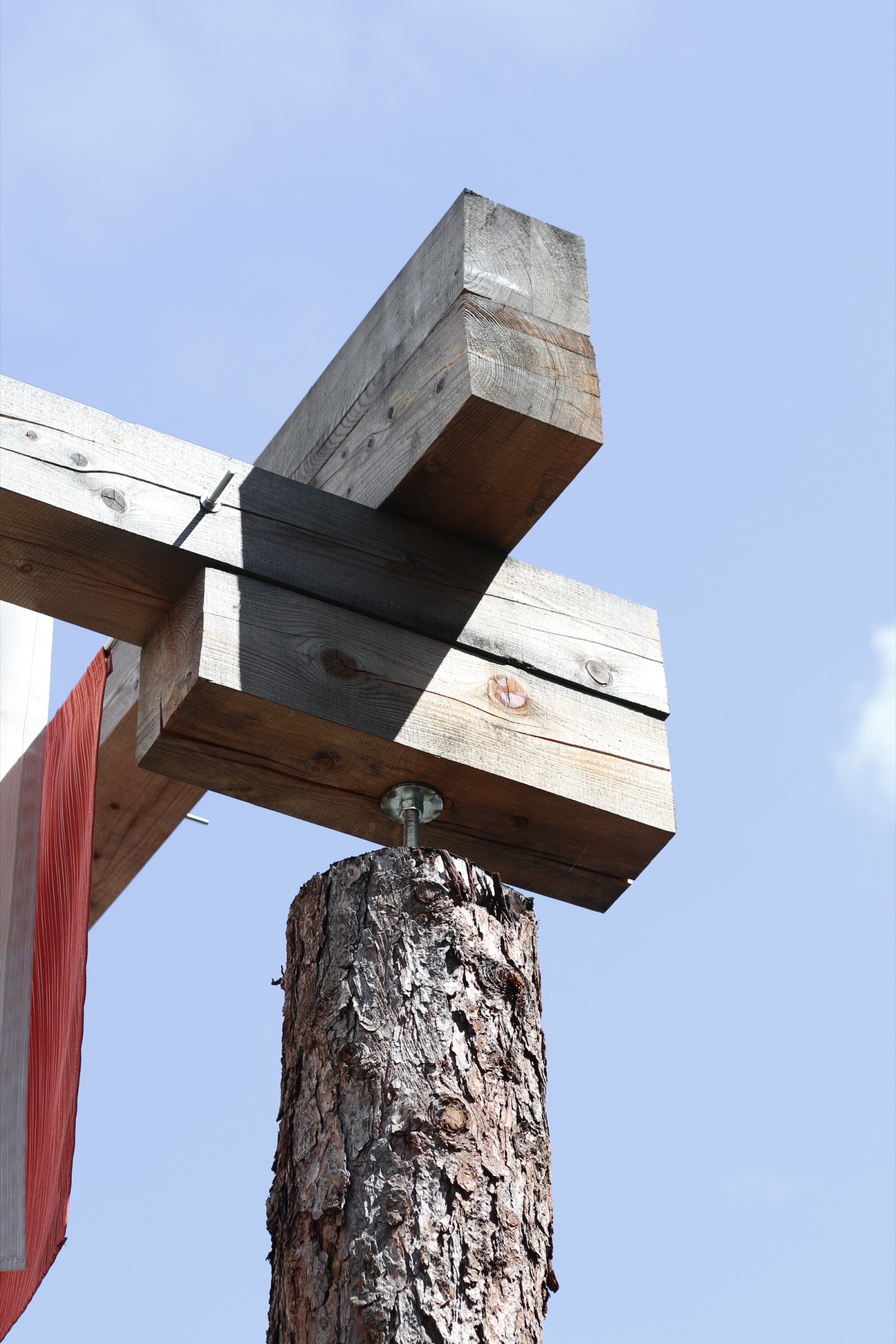
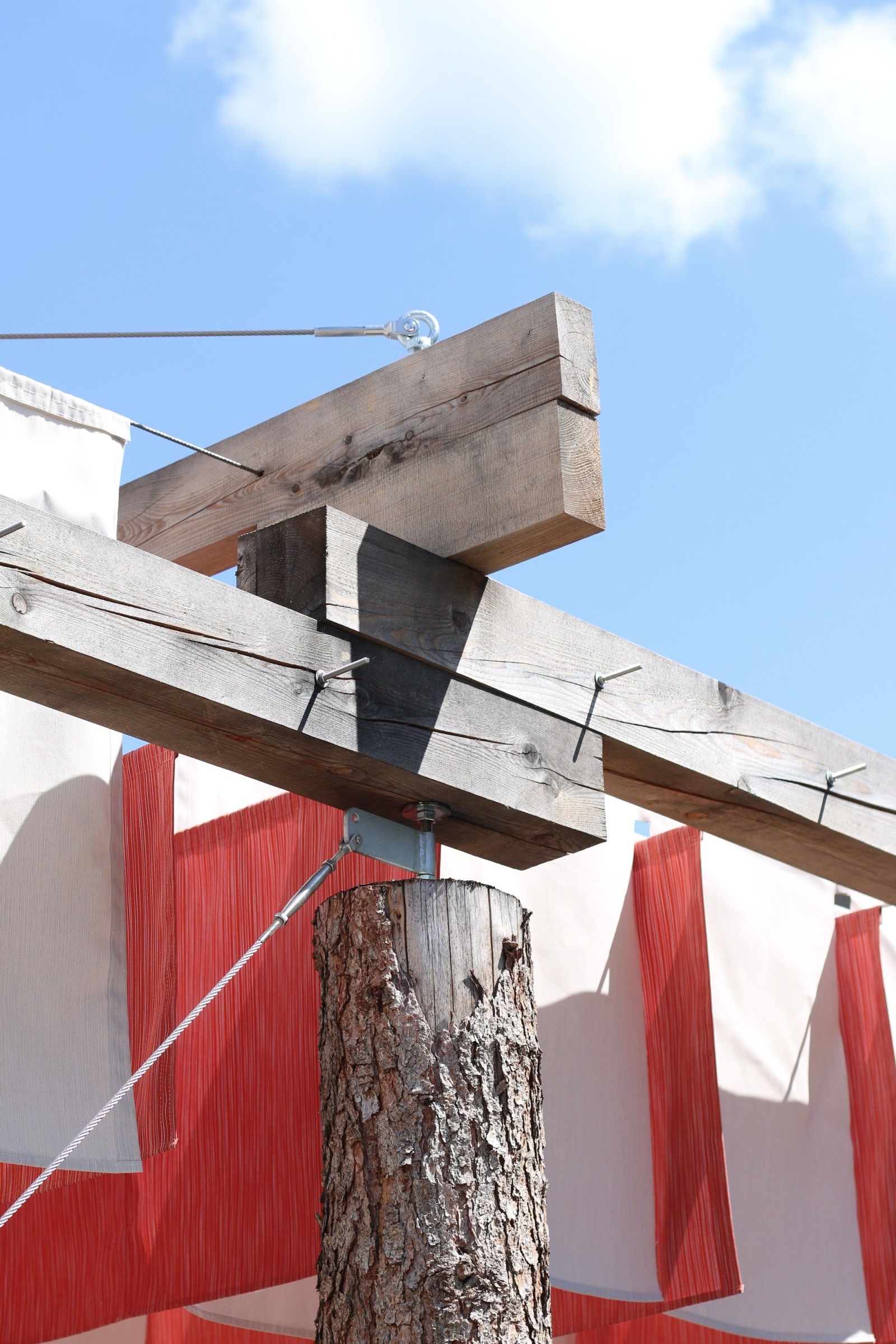
The construction uses local, minimally processed materials to limit the carbon footprint. The structure is therefore made of larch sourced from the Fribourg bourgeoisie’s forestry centre. The columns consist of unprocessed, rough-hewn trunks, and the beams are simply sawn and squared, keeping transformation to a minimum to preserve the potential for future reuse of the framework. Situated on the roofs of the sports hall and of the swimming pool, the structures cannot be anchored to the ground; their stability is therefore ensured by a weighting device. The shading system consists of upright fabric elements that filter sunlight while allowing natural ventilation. The pavilions are composed of structural elements deliberately left in their raw state and assembled with minimal intervention: laid out, stacked or simply bolted together. The structural principle is clear whilst allowing for variations in their arrangement. Built directly on-site as a self-build project, the construction was carried out in accordance with the school timetable and the presence of the students.
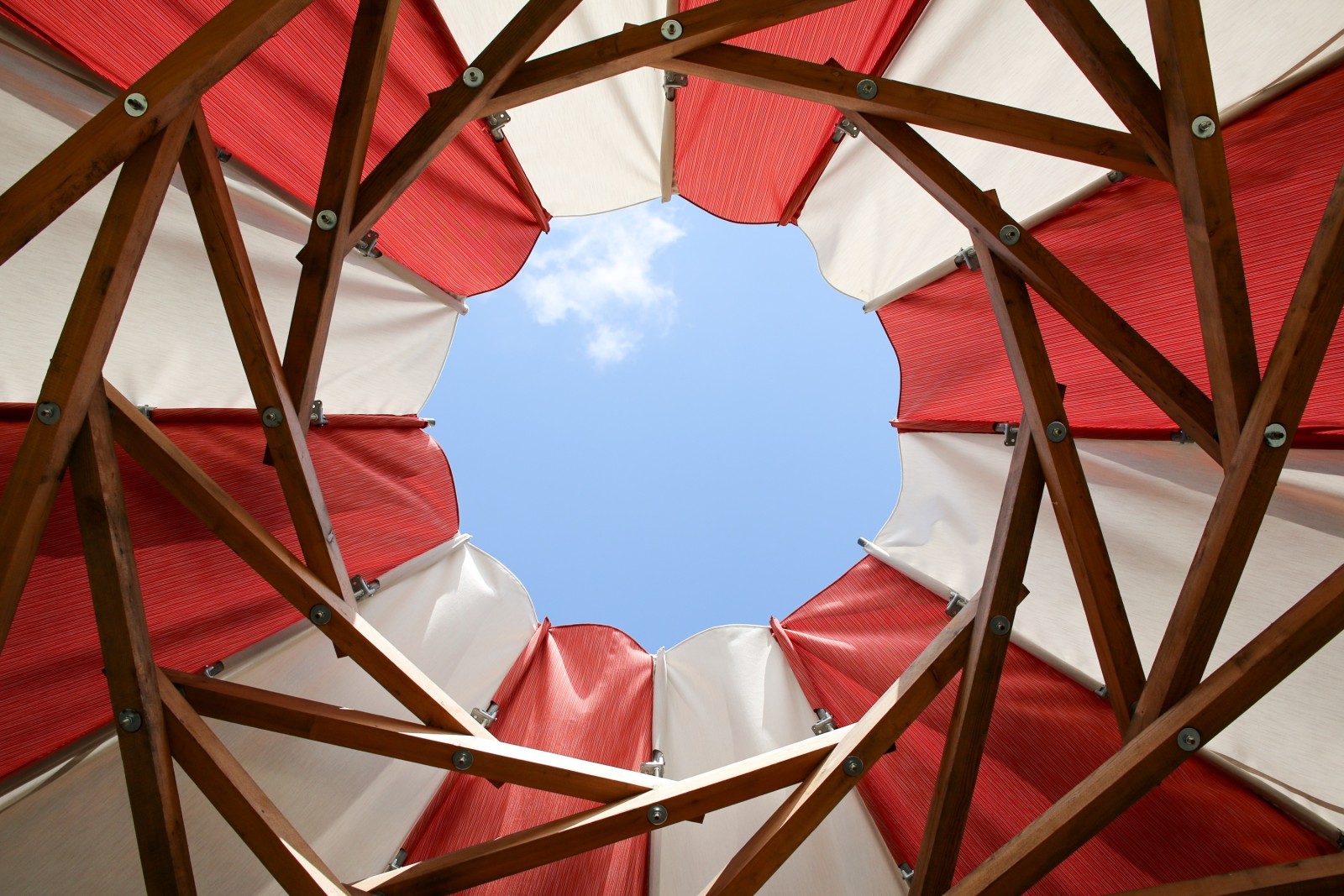
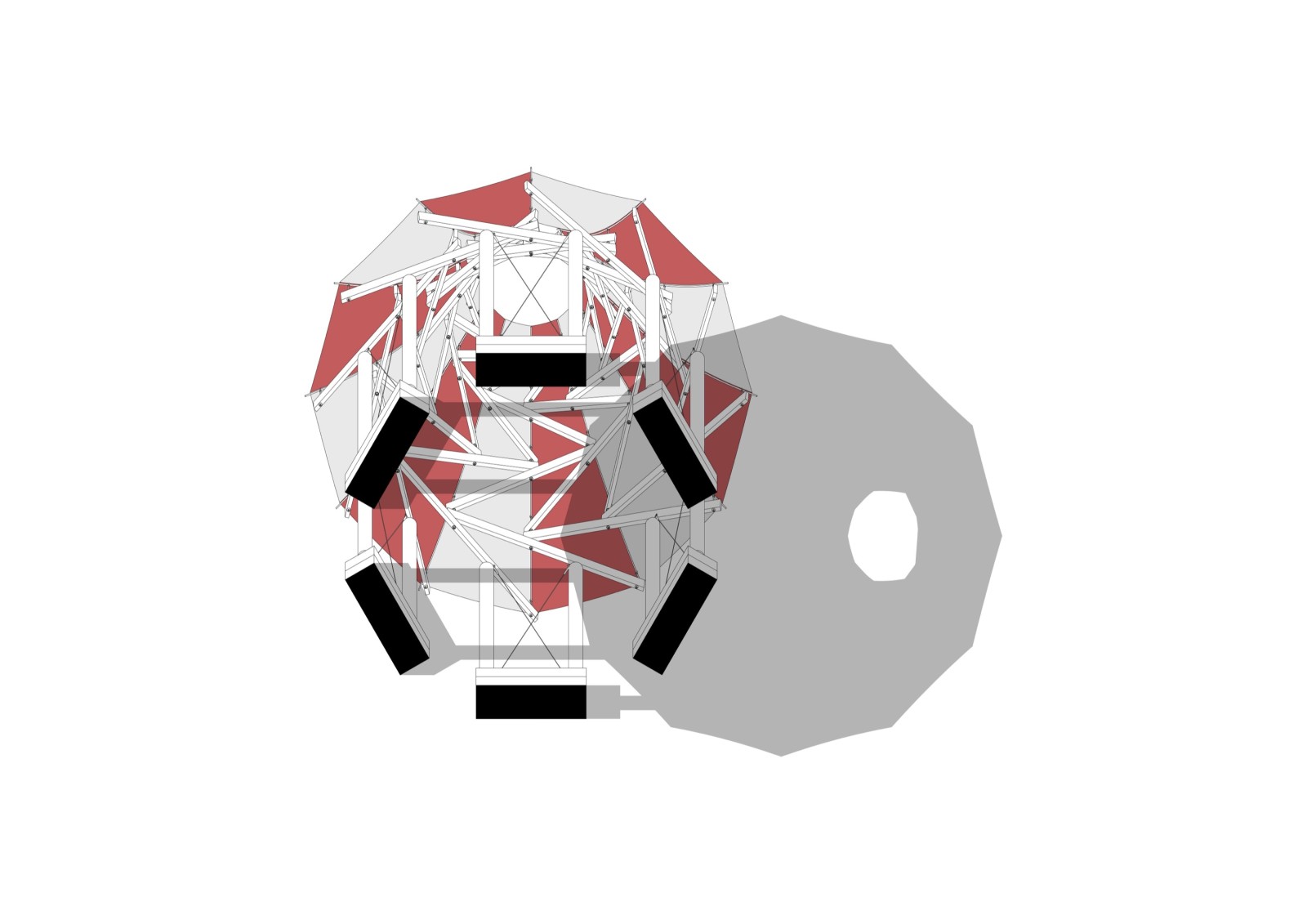
The first pavilion takes a circular form, creating a central space with a diameter of 7.2 meters. This dodecagon forms an open arena for games, educational activities and other collective uses. A tent-like canopy provides continuous shade, whilst an opening at the top allows hot air to escape and facilitates natural ventilation. The framework is organised according to a reciprocal structural system in which each beam rests on the next to form a faceted geometry and spanning a wide area whilst using short beams. The trunks rest on sawn reused concrete slabs, whilst threaded rods and cables ensure assembly and stability.
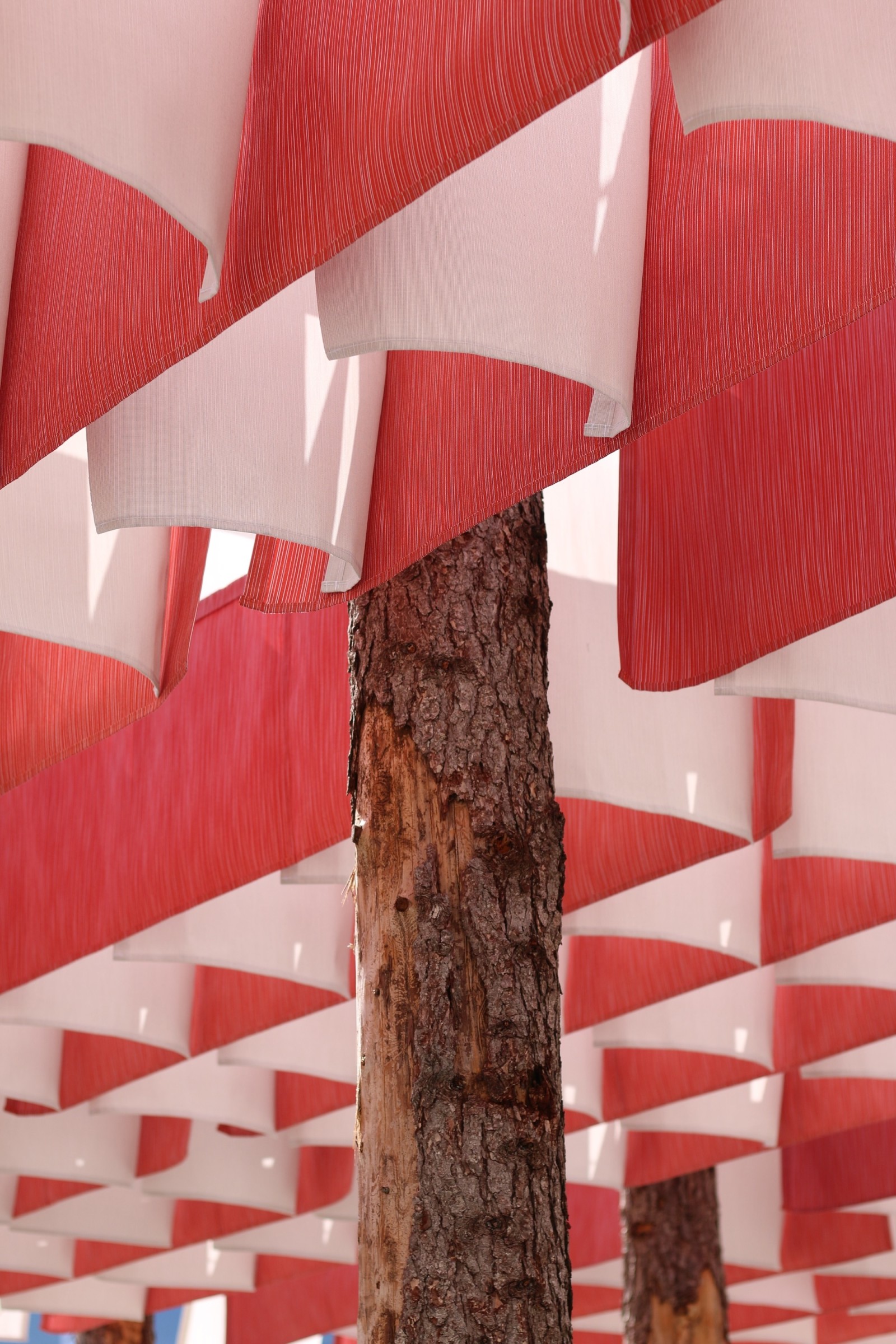
The second pavilion is organised as a chequerboard pattern of nine squares. The structure fits into the existing ground layout thanks to garden paving slabs used as supports for the columns. A series of vertical fabric elements creates filtered shade. Their rhythm and dimensions prevent the sunrays from reaching the ground, whilst allowing air to circulate and maintaining a visual connection with the sky. The massive beams, simply stacked on top of the columns, form a grid on which the fabric can be suspended.
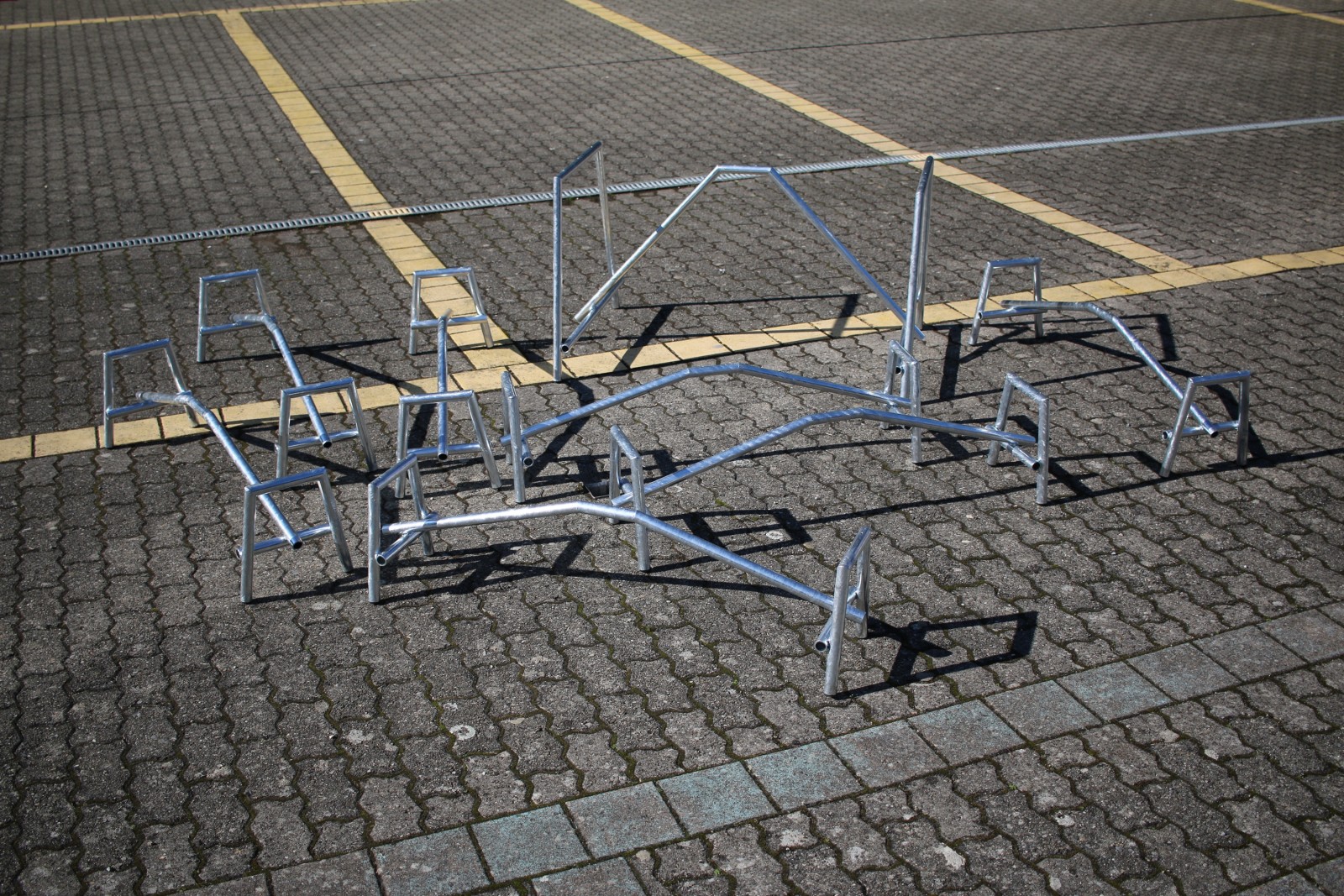
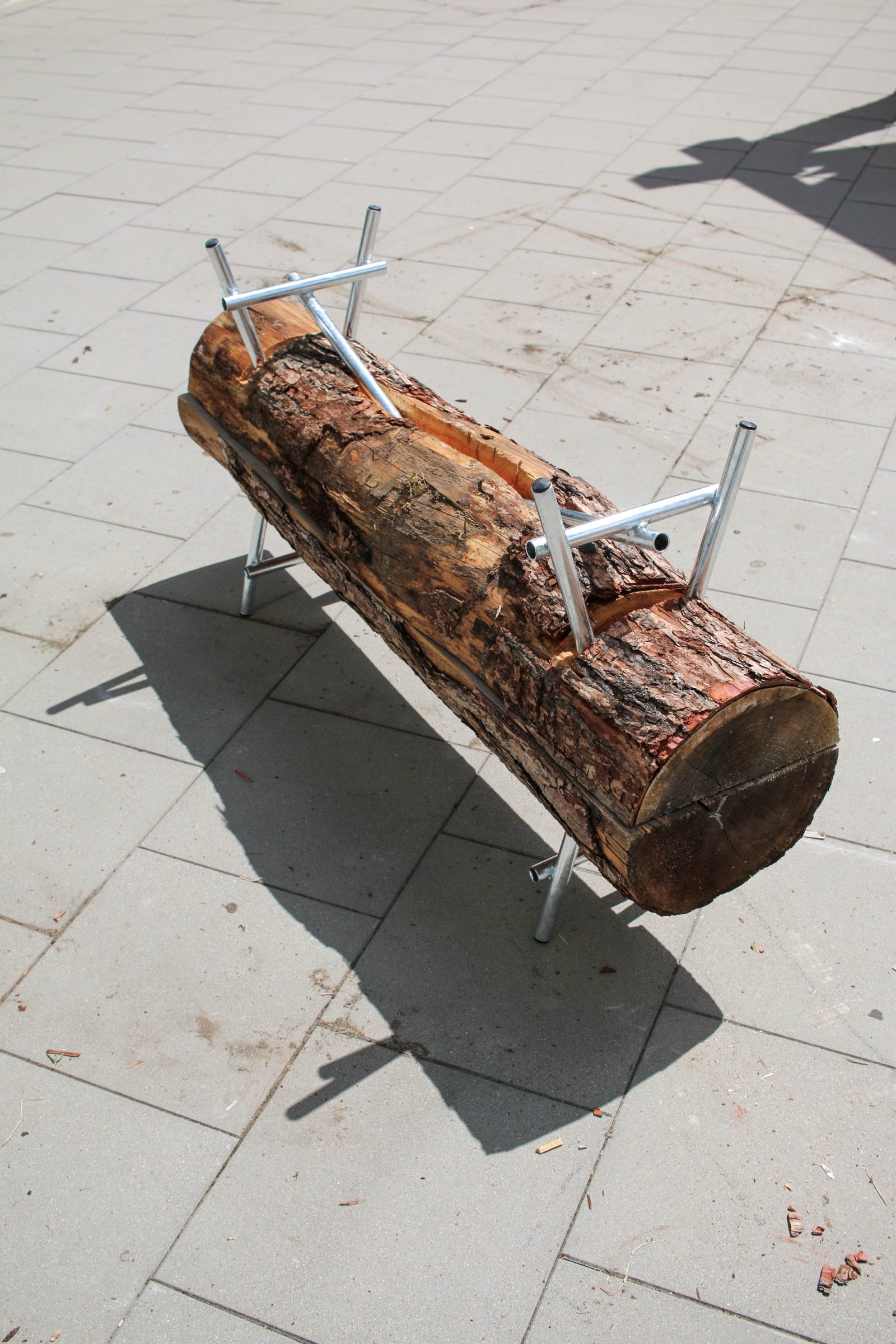
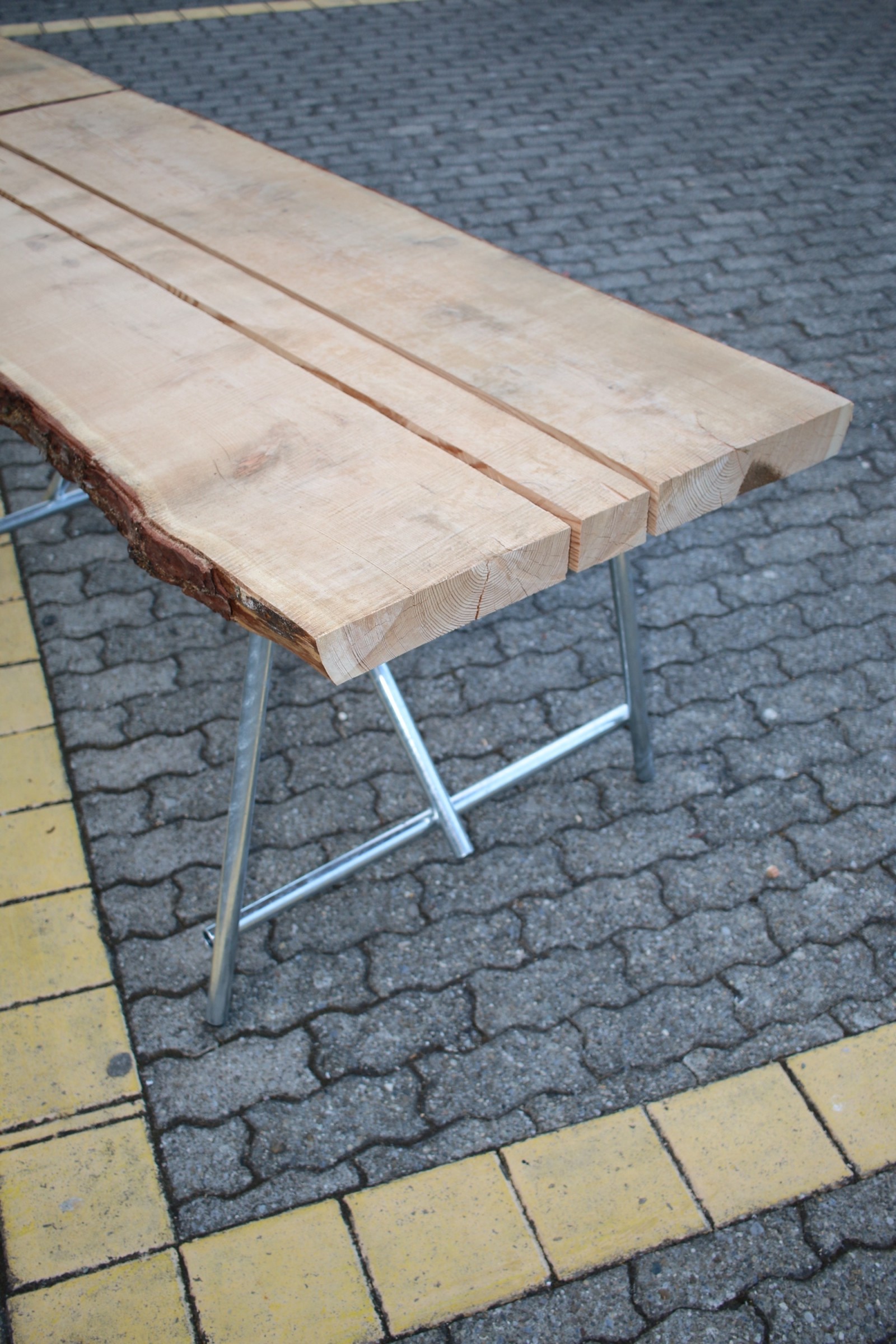
Around the pavilions, furniture made of half-logs and rough larch planks support and activates the uses of the courtyard.
The pavilions explore an architecture characterised by a restrained use of materials. The use of minimally processed timber and simple joinery as well as the possibility of dismantling align the project with a philosophy of reuse and reversibility. This raw aesthetic embodies an architecture in which the material remains legible and the structural principle is clearly visible. Through these lightweight structures, the project outlines an approach to climate adaptation based on site-specific interventions, capable of transforming urban microclimates locally whilst questioning our relationship with resources and construction.
Project team: Esther Chatelain, Marion Gisiger, Flavio Ribeiro, Elias Taillebois, Jean-Michaël Taillebois, Sébastien Tripod
Developed and produced (self-build) in collaboration with the Energy Institute, the Transform Institute at HEIA-FR (Matias Cesari, Raphaël Compagnon, Estela Schaffner, Marc Vonlanthen)
Participatory approach: Bio éco (Manon Membrez)
Civil engineering: Olivier Francey
construction assistance: Patrick Gosatti, Stephan Weber
Users: CO de Jolimont
Financed by: plan climat du canton de Fribourg